The rail journey south from Edinburgh in December 2025 is one of the nicer trips to take in the UK: the key is to secure a seat on the coastal side (the left-hand side when travelling south). The route unfolds past Gullane and Dunbar, followed by the long sweep across the viaduct at Berwick-upon-Tweed with dramatic views to the outline of Lindisfarne.
Beyond the initial Scottish coast, the journey offers notable landmarks. Keep an eye out for the distinctive outline of Bamburgh Castle on the Northumberland coast, as well as the striking figure of the Angel of the North as you leave the Newcastle area. Finally, there’s Durham Cathedral, which rises majestically above the River Wear.
While the scenery is very pleasant, the onboard experience at least on this trip was not. First-class "lunch" amounted to a burnt—rather than toasted—teacake. Worse, the change at York was muddled by unclear alighting instructions and double-booked seats. Thanks, LNER. Despite that, York itself is impressive. Even from the platform, the Victorian ironwork and the Minster’s towers give the city a composed elegance. The memory of time spent there remains one of quiet streets, excellent restaurants, and magnificent history.
Sidebar: The UK Rail System: Fragmentation and Reform
The rail shortcomings reflected the UK railway’s fragmented structure: centrally owned infrastructure, multiple operating companies, and uneven communication. The system is split among Network Rail (NR), which manages the tracks and signals; private Train Operating Companies (TOCs) like LNER, which run the services; and separate companies that own the trains themselves. This fragmentation—where multiple parties have misaligned incentives—is precisely why breakdowns quickly surface as "vague announcements, shifting platform guidance, and operational inconsistencies."
The railway is now moving toward renationalisation, with the long-term plan to establish a single, public body called Great British Railways (GBR) by 2027. This shift aims to simplify the system, create unified accountability, and improve the consistency of the passenger experience. Lets hope so. People have the right to be treated with some dignity and I am not sure most would believe this to be true currently.
Golf in the Leeds Area: The MacKenzie Legacy
Changing track, in a region defined by its rugged landscape, the Leeds area offers a surprisingly rich selection of parkland and moorland golf. Clubs like Alwoodley Golf Club and Moortown Golf Club are internationally recognized, both having played a foundational role in golf history.
Alwoodley Golf Club: Founded in 1907, this course is highly significant as the first design by the legendary architect Dr. Alister MacKenzie, who would go on to design global masterpieces like Augusta National (home of The Masters) and Cypress Point. Alwoodley is revered as the "Original MacKenzie," setting the template for his distinctive naturalistic bunkering and sophisticated green complexes on a challenging heathland landscape.
Moortown Golf Club: Also designed by MacKenzie (opening in 1909), Moortown hosted the 1929 Ryder Cup, marking the first time the tournament was held on British soil. The crucial match was won by the Great Britain team 7-5. Although the text states Moortown hosted in 1937, that year's tournament was actually held at Southport & Ainsdale, confirming the 1929 event as its defining Ryder Cup moment. The course is known for its challenging "Gibraltar" hole, a famous par-3, and is celebrated for its strategic, inland links-like characteristics.
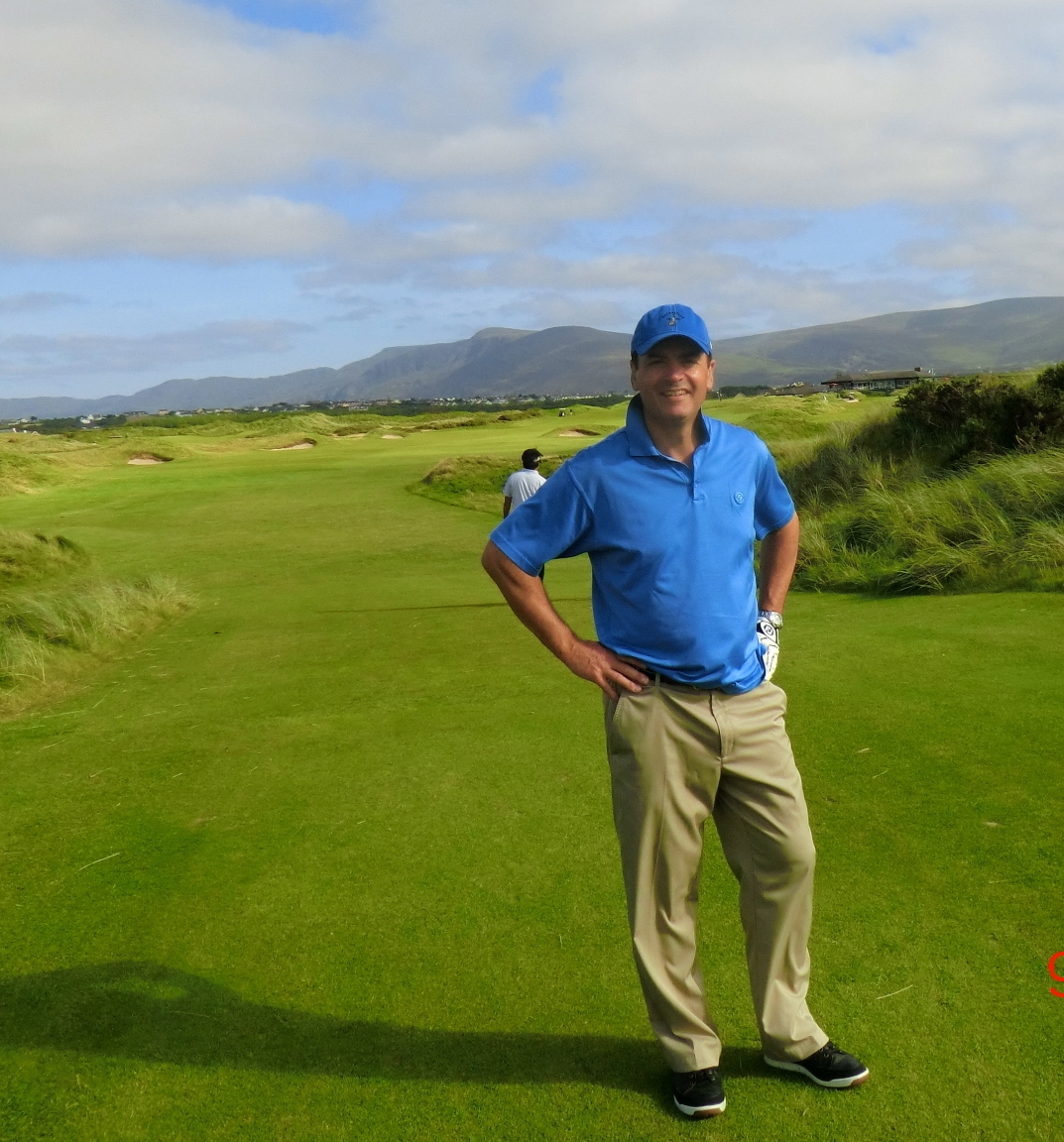
My brother's home course, Hawley Golf Club, epitomizes the best of West Yorkshire golf. Established in the mid-1920s from humble beginnings as a 3-hole course, it sits closer to the moorland fringe, offering testing elevation changes and firm, draining fairways that make it playable year-round. It’s an honest, well-established course that demands accurate iron play and rewards local knowledge—a true representation of the demanding, yet highly enjoyable, golf found outside the prestige of the city’s heathland giants.
Elland Road: Exhilaration and Insecurity
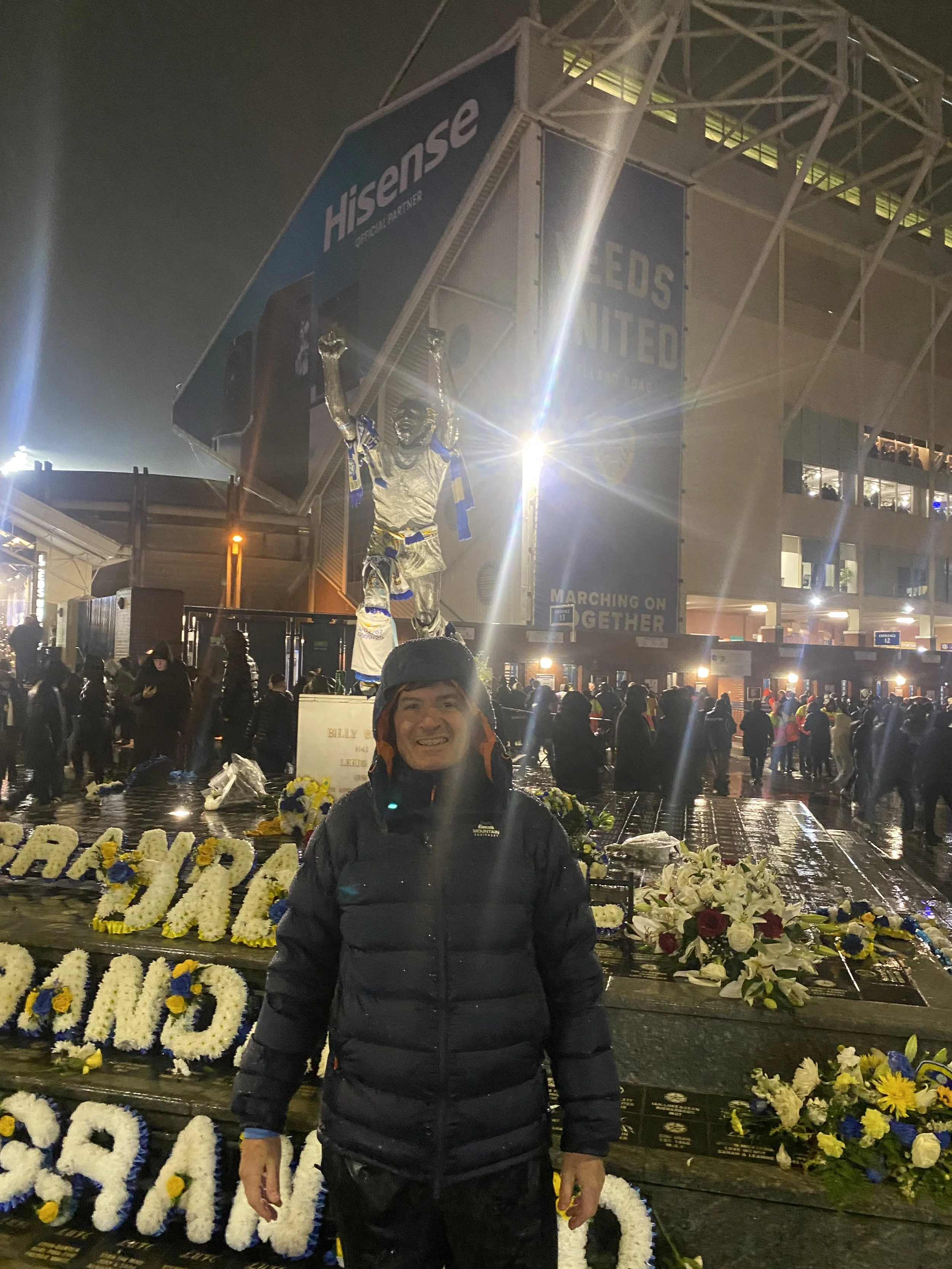
After being met by my brother, who has lived in the area for 35 years, and a quick lunch we headed to Elland Road. The atmosphere was charged, bordering on volatile as 36,800 fans converged through the cold, rainy evening.
The Shadow of Glory: Billy Bremner and Club History
The statue of Billy Bremner is a reminder of how good this team used to be, and also how fragile sports success is. Bremner, the iconic captain of the Don Revie era, led Leeds to two First Division Champions titles (1969, 1974). Any reflection on Leeds’ past inevitably drifts toward Europe, where the club’s sense of grievance remains almost generational. The 1975 European Cup Final in Paris is etched into Leeds folklore not for the quality of the football but for the officiating. Referee Michel Kitabdjian’s refusal to award two clear penalties—and the disallowed Lorimer goal after an inexplicable late offside flag—fed the belief that a wary establishment simply would not allow Revie’s bruising, unfashionable Leeds to lift the continent’s biggest prize. Bayern Munich were crowned champions, but for many Leeds supporters the match became shorthand for injustice on a grand stage, a reminder that their club’s fiercest battles were sometimes fought not only against opponents but against the officials themselves.
Revie’s overall approach was not without controversy, as Leeds were a very tough team. As a Scot, it is fascinating to think how many Scots were in that side during that era.
Leeds did not simply have one or two Scots—they had an entire cohort. Alongside Billy Bremner, Eddie Gray, and Peter Lorimer, the team of the mid-1970s also featured Gordon McQueen at centre-half, Joe Jordan emerging up front, and two Scottish goalkeepers in David Harvey and David Stewart. It gave the squad a distinctly Caledonian flavour, with five of those players regularly influencing first-team matches. For a club rooted in Yorkshire identity, the contribution of these Scots was both defining and disproportionately large. This golden age contrasts sharply with the club's subsequent history: financial turmoil, relegation in 2004, and a descent to the third tier. The statue stands against the memory of those depths, before the club attracted financial support from the 49ers Enterprises and finally earned promotion back to the Premier League in 2020 after a 16-year absence.
Sidebar: Spectator Behaviors -An Unvarnished Experience
As noted, at times the atmosphere was visceral—football in its most unvarnished form, but my observations of the crowd's emotional spectrum are as follows:
Indignation: A collective roar when a decision goes against the home side, instantly uniting thousands in a shared sense of injustice. The shouted “do your job” is less an appeal for neutrality than a demand for favourable treatment.
Disgust: A deep, vocal groan when a disliked player makes even a minor mistake—a reflex that seems partly tied to the uncomfortable reality that these athletes earn more in a week than many supporters do in years. The expectation of perfection rises in proportion to that gap.
Reassurance Through Insult: Insults hurled at opponents and officials often appeared less about hostility and more about self-soothing; aggression used as a release valve rather than genuine malice. The act itself seemed to offer a strange form of solidarity.
Crude Misogyny: More troubling was the ease with which misogynistic language was deployed—even by men standing beside their daughters or partners. The casual acceptance of it, unchallenged and treated as a joke, revealed how crowd dynamics can normalise behaviour that would be unacceptable in any other setting.
Laddish Crudeness: Particularly among younger men, there was a performative quality to the aggression—crudeness as a display for peers rather than a reaction to the match. The behaviour seemed driven as much by group reinforcement as by genuine emotion.
Crowds are complex organisms, and these observations are merely my amateur musings. But they were enough to confirm one thing: I would never take my wife nor grandchildren to these games.
The Match: Liverpool’s Fragility Exposed
Liverpool’s inconsistent season was distilled into the next 99 minutes. They built a 2–0 lead with apparent ease, but the final 20 minutes exposed their underlying fragility.
A misjudged challenge by Konaté conceded a soft penalty, instantly shifting the momentum. When nine minutes of added time were announced—excessive by any reasonably biased Liverpool fan’s measure—the balance tilted back decisively. Leeds gambled well with their substitutions and, in the sixth minute of stoppage time, completed their equaliser. The final 3–3 draw, snatched from a position of comfort, perfectly captured the deep frustration surrounding Liverpool at present.
Amateur pundit: Why Liverpool Now Look Beatable
The contrast with last season’s authority is stark. Despite expensive recruitment (Wirtz, Isak, Ékitike, Frimpong), the side feels structurally and psychologically unsettled, primarily due to midfield shortfalls which are exacerbated by defensive fragility.
Reliance on an out-of-form Konaté destabilises the center. Furthermore, the performance of the new full-backs is a clear source of friction. The observation that Miloš Kerkez frequently struggles to complete simple passes to teammates pinpoints a major flaw; his lack of composure under pressure slows attacks and forces the team to concede possession.
To compensate, Gravenberch, an excellent player, is forced to shield the back four, while one of the team’s best midfielders is redeployed as a hybrid right-back. The midfield is left slow and vulnerable due to the excessive burden on Wirtz—technically gifted but asked to carry transitions in a league defined by intensity. This, combined with Mac Allister’s downturn in form and the high fee yet-to-be-justified by Isak, results in a team that appears anxious and unexpectedly beatable.
Dinner in Bradford and the Region’s Undercurrents
After the match, we travelled to Bradford for a curry dinner at Lala’s. The food was excellent—the chicken tikka quite superb, and the biggest nan bread I have come across.
In recent years, however, the broader region has been the subject of uncomfortable public discussion due to the shocking scale of group-based Child Sexual Exploitation (CSE), commonly referred to as the "grooming gangs" scandal. Local inquiries and reports have highlighted systemic problems: organised criminal networks, the exploitation of vulnerable young people, and deep failings by local authorities and police.
Political Response and the Prime Minister’s Involvement
This issue is a major political focus in 2025. The current Prime Minister, Keir Starmer, has faced pressure regarding his response, rooted in his previous role as the Director of Public Prosecutions (DPP). While critics allege he failed to prosecute some cases effectively, Starmer defends his record, stating he tackled the issue "head-on," reopened closed cases, and brought the first major prosecution of an Asian grooming gang. Following the National Audit on Group-based Child Sexual Exploitation and Abuse, the government committed to a national statutory inquiry and advanced legislative changes, including making it mandatory to report child sexual abuse.
It is a troubling backdrop: a region with great cultural richness and hospitality that has also been forced to confront difficult realities about exploitation and vulnerability.
Return North
The journey back to Edinburgh took place in miserable weather—wet, cold, and misty, the landscape reduced to muted shapes. CrossCountry suspended seating reservations due to “severe overcrowding,” an explanation that seems to undermine the very purpose of reservations. Fortunately, I secured a forward-facing table seat; standard class looked notably austere.
As the train crossed into Scotland, the coastline emerged through the mist, and the shift in atmosphere was immediate. It was the quiet welcome home.