Aberdeen and the northeast coast | 13-20 September 2026
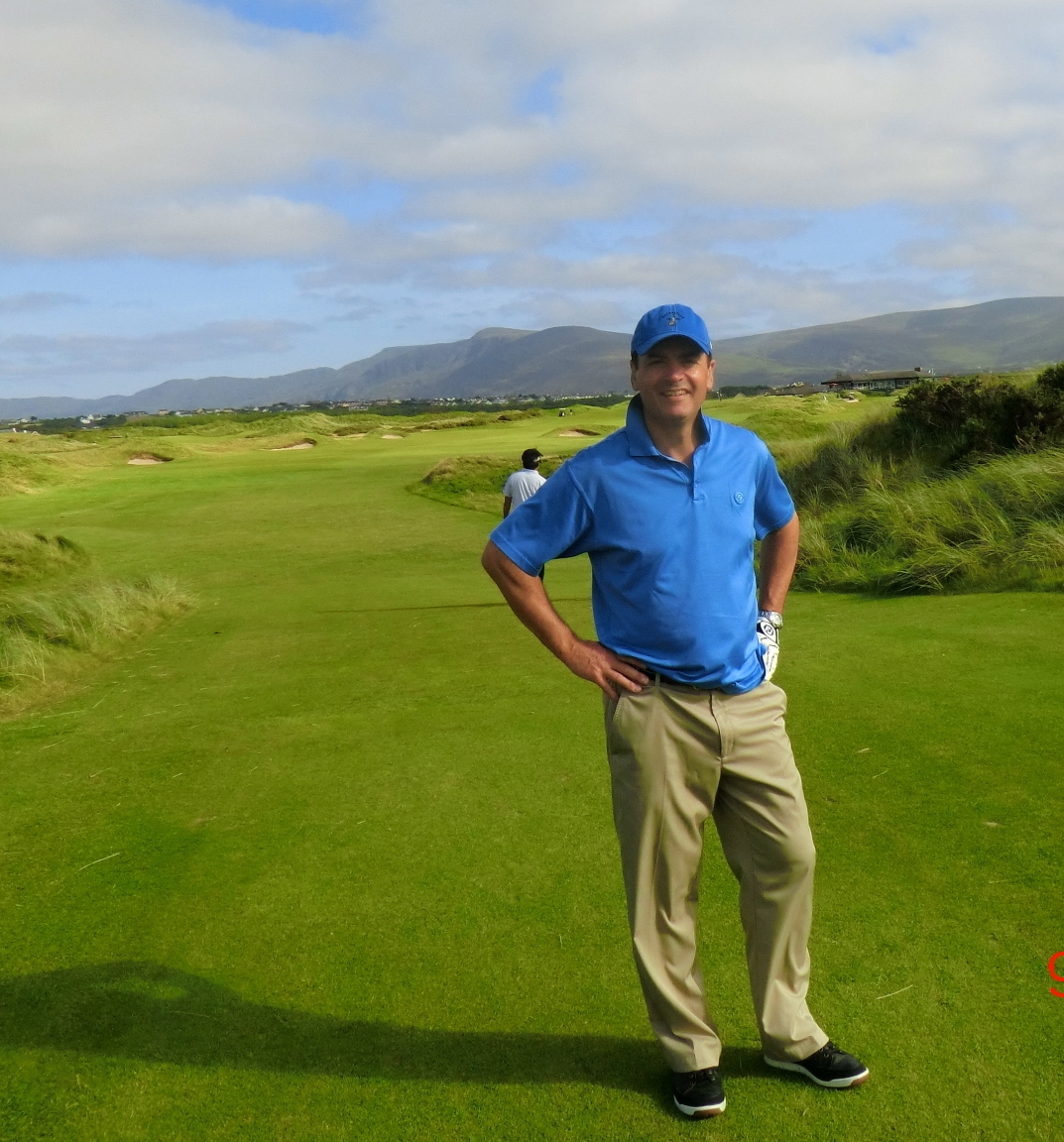
This was our eighth Scottish golf journey, but our first built around Aberdeen. Four Winged Foot friends flew into Edinburgh, collected a van and travelled north for seven days of golf, using the Sandman Signature in central Aberdeen as a single base. Montrose provided an enjoyable opening stop on the drive north. From Aberdeen we ranged south to Edzell, north to Cruden Bay and Balmedie, and only a short distance to Royal Aberdeen. The golf was deliberately repetitive in the best sense. Cruden Bay and Royal Aberdeen were each played twice, allowing first impressions to mature. Cruden Bay became the most distinctive and hospitable overall day; Royal Aberdeen emerged as the finest pure course and the most complete golf experience. Trump International offered the clearest contrast: the original course was a demanding and memorable finale, while the New Course felt over-designed and considerably less rewarding. What made the week successful was not simply the quality of the courses. The caddies, professional-shop teams, clubhouse staff and the easy warmth of the smaller clubs mattered enormously. The trip confirmed that Aberdeen is not just a staging point for golf. Its granite architecture, working harbour and North Sea character gave the week a sense of place, while meals at the clubs, the New Inn in Ellon and The Silver Darling added a welcome social dimension away from the golf.
Our first round at Royal Aberdeen was wet, difficult and impressive. The second, in better weather, confirmed the judgement: Balgownie was probably the best pure golf course of the trip, combining natural architecture, exceptional presentation and a welcome entirely free of self-importance.
We arrived at Royal Aberdeen after an early round and lunch at Edzell. That was an ambitious schedule, and the weather made it more so. We began in sunshine, became thoroughly wet for roughly fifteen holes, and then finished in lovely light as if the afternoon had been straightforward all along.
The rain did not conceal the quality of the course. If anything, it emphasised its severity. Royal Aberdeen does not rely on surprise or theatrical shaping. It applies pressure through the ground, the bunkering, the green complexes and the wind. After the eccentricity of Cruden Bay and the freedom of Edzell, this felt like a considerable step up in examination.
The club was founded in 1780 as the Society of Golfers at Aberdeen and moved from the Queen’s Links to Balgownie in 1888. The Simpson brothers, Archie and Robert, laid out the course, and James Braid later lengthened and re-bunkered it. That history gives the place authority, but the golf never feels preserved merely because it is old.
The course is not especially complicated to describe: a celebrated outward nine in the dunes followed by a more exposed inward half. The experience is much richer. Each hole asks for control of line and trajectory, and the accumulation of those demands is what makes the course formidable.
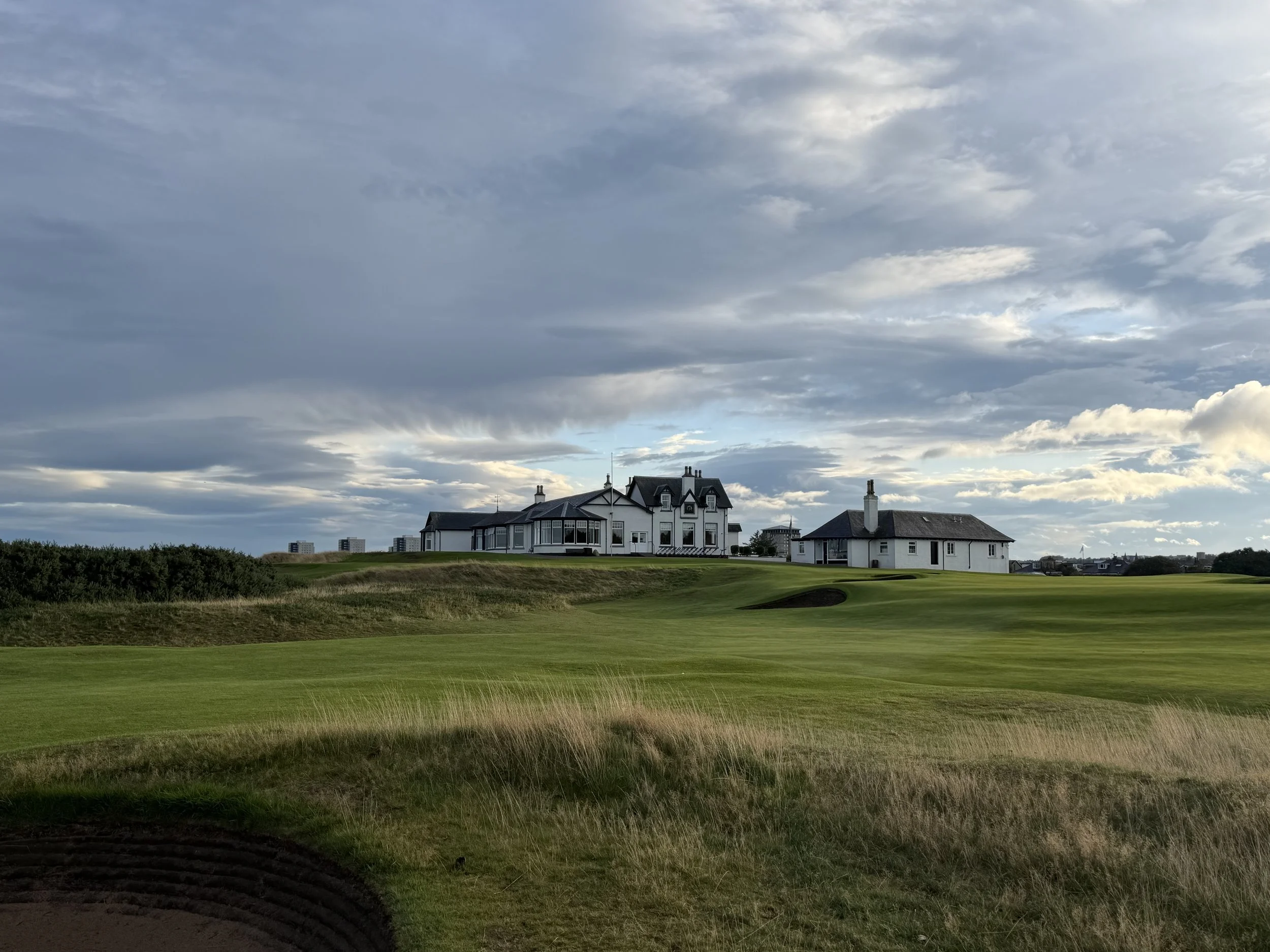
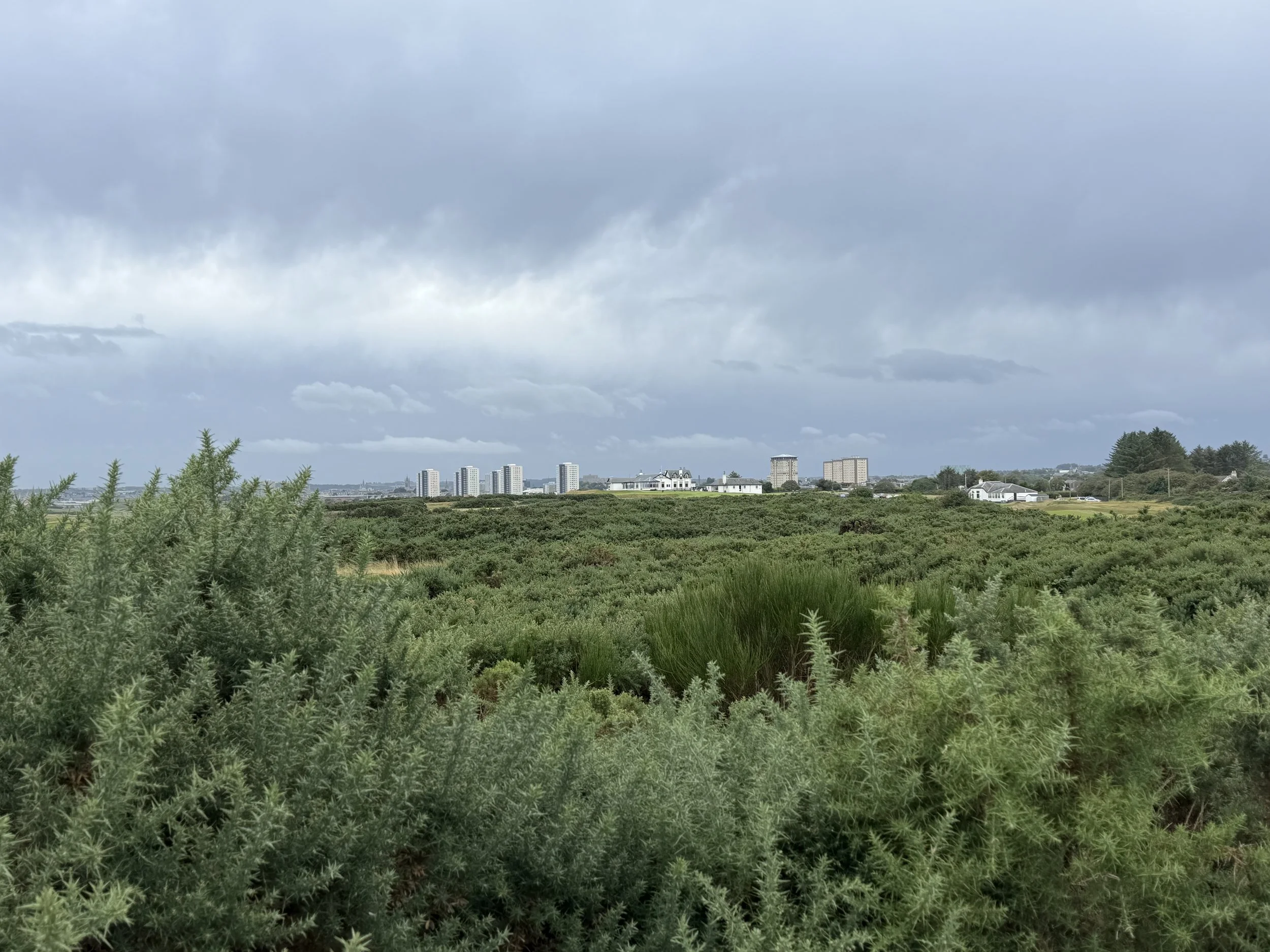
The first hole leaves the lovely traditional clubhouse and moves towards the North Sea. The setting establishes the round immediately: clubhouse behind, dunes ahead and the sense of entering one of Scotland’s great stretches of linksland. The outward holes occupy wonderfully natural ground beside the sea, with the terrain shaping both the views and the strategy.
The sixth is a very tough par five and one of the sternest individual tests on the course. It requires length, but length without placement is of limited use. That principle persists across Balgownie. Good drives must be followed by accurate approaches, and even a small error in angle can leave a disproportionately awkward next shot.
The inward nine is more exposed and can be exceptionally difficult into the prevailing wind. It may not possess quite the same visual drama as the outward half, but the golf remains relentless. There are few places to relax and even fewer where concentration can be recovered cheaply once lost.
We returned three days later and found a fortunate weather window. We teed off at 10.00 am and finished at 2.00 pm, immediately before the rain arrived. In drier conditions we could see the course more clearly and appreciate how naturally it is constructed. The challenge was still severe, but it also felt conspicuously fair.
That fairness comes from coherence. The hazards make strategic sense, the greens receive the appropriate shot and the contours influence play without appearing exaggerated. The comparison with the Trump New Course was unavoidable. Royal Aberdeen needed no manufactured complication. Its difficulty came from the land, wind, bunkering and firmness of the surfaces.
The closing three holes are outstanding. They gather the round towards a formidable 18th beneath the clubhouse. By then the course has asked almost every question available, but the last still requires a committed drive and a precise approach. It is one of the strongest finishing holes we have played and an entirely appropriate conclusion.
Findlay caddied for us on both visits. He was personable, thoughtful and excellent company, with the course knowledge required to make a difficult links understandable without pretending it was simple. He is studying economics at Edinburgh, which gave us plenty to discuss during two long rounds.
Having the same caddie twice materially improved the second experience. Findlay already understood our games, while we had begun to understand the course. Advice could therefore become more specific. We were no longer merely trying to find the correct line; we were beginning to see why it was correct.
Royal Aberdeen was the best-presented course of the trip. The greens were outstanding, the fairways beautifully defined and the links turf firm, natural and consistent. Importantly, the conditioning supported the architecture. The ball reacted predictably, the ground game remained available and well-struck shots were generally rewarded.
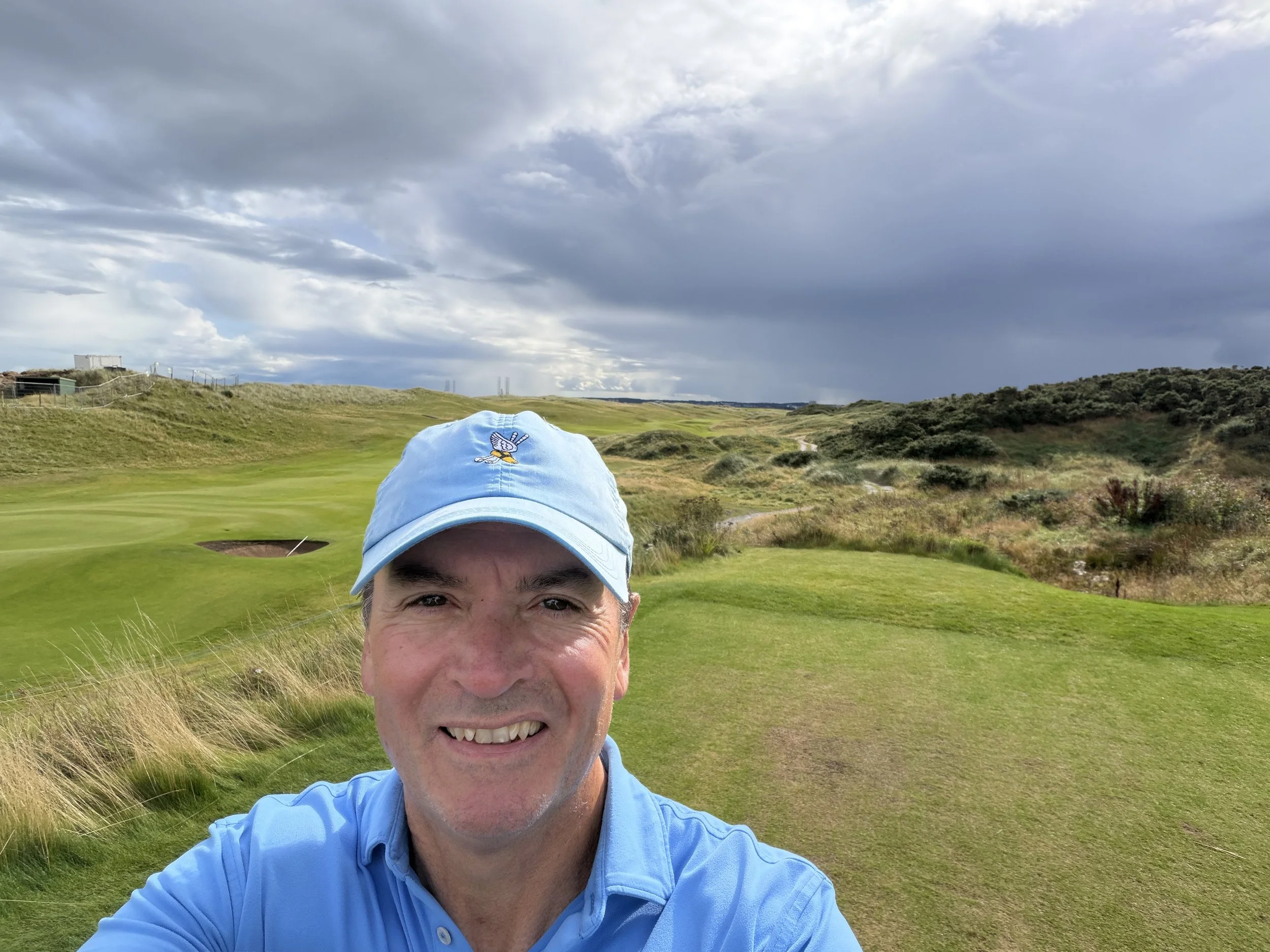
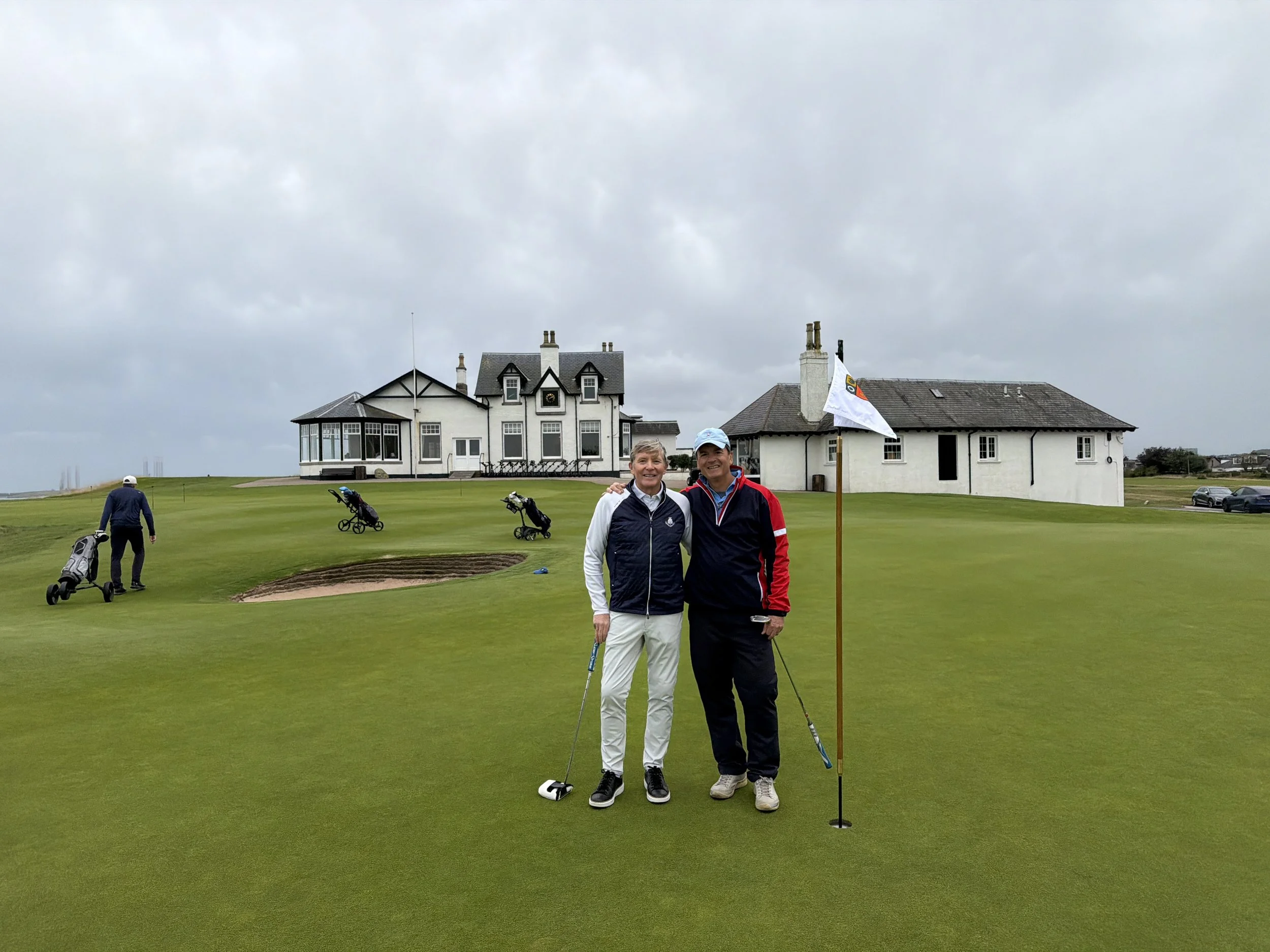
The professional-shop team was notably helpful, and the clubhouse staff were warm and attentive on both visits. We enjoyed a very good lunch after the second round. Royal Aberdeen is a serious and historic venue, but it never felt stiff. The club seemed confident enough in its own quality not to overstate it.
Cruden Bay may remain the more romantic and visually individual memory, but Royal Aberdeen has the strongest claim to be the finest course we played. It was demanding in poor weather and magnificent in better conditions. Both experiences felt authentic.
Useful links
• Royal Aberdeen Golf Club Official club website
• Balgownie Course Guide Hole-by-hole guide
• Visitor Information and Green Fees Visitor booking details
• Scorecards Course yardages and cards
• How to Find Us Directions to Balgownie
Series note
This is the fourth course portrait in the Aberdeen Golf Odyssey series for A Golfer’s Blog. It combines both rounds at Balgownie, including the people and presentation that made Royal Aberdeen the most complete pure-golf experience of the week.