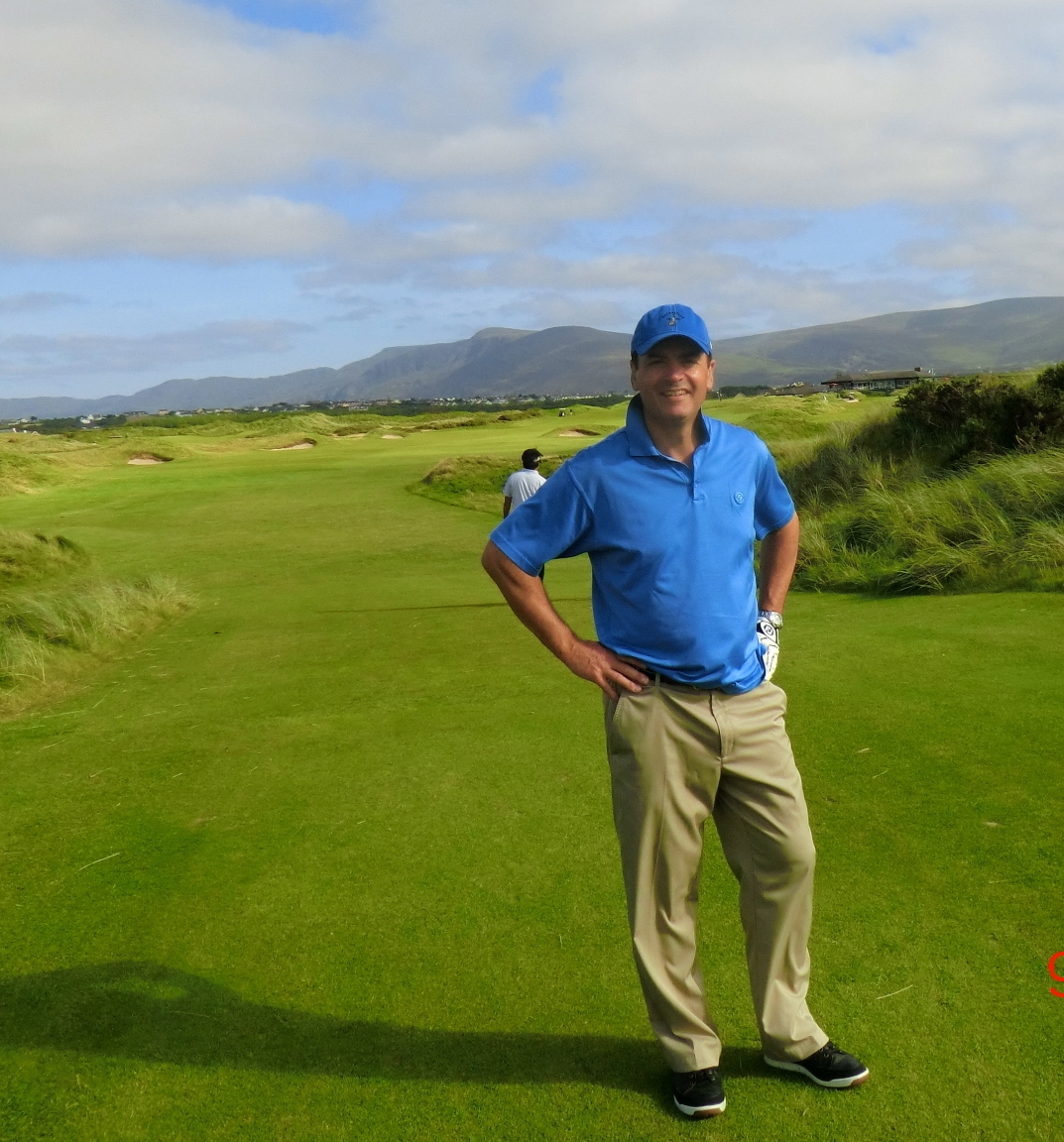
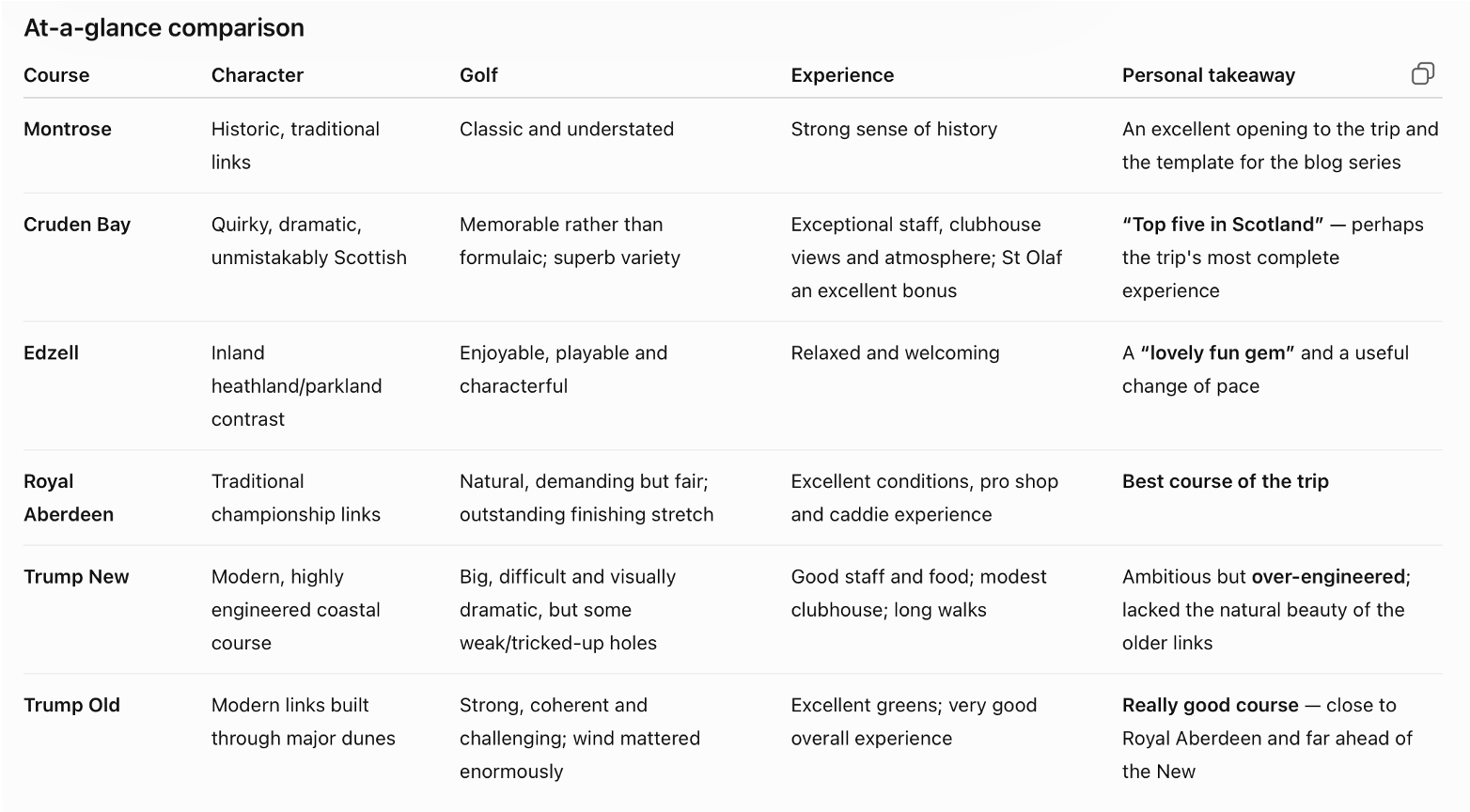
This was our eighth Scottish golf journey, but our first built around Aberdeen. Four Winged Foot friends flew into Edinburgh, collected a van and travelled north for seven days of golf, using the Sandman Signature in central Aberdeen as a single base. Montrose provided an enjoyable opening stop on the drive north. From Aberdeen we ranged south to Edzell, north to Cruden Bay and Balmedie, and only a short distance to Royal Aberdeen. The golf was deliberately repetitive in the best sense. Cruden Bay and Royal Aberdeen were each played twice, allowing first impressions to mature. Cruden Bay became the most distinctive and hospitable overall day; Royal Aberdeen emerged as the finest pure course and the most complete golf experience. Trump International offered the clearest contrast: the original course was a demanding and memorable finale, while the New Course felt over-designed and considerably less rewarding. What made the week successful was not simply the quality of the courses. The caddies, professional-shop teams, clubhouse staff and the easy warmth of the smaller clubs mattered enormously. The trip confirmed that Aberdeen is not just a staging point for golf. Its granite architecture, working harbour and North Sea character gave the week a sense of place, while meals at the clubs, the New Inn in Ellon and The Silver Darling added a welcome social dimension away from the Golf.
Northeast Scotland proved ideal for a golf journey of this kind. The courses are close enough to create a coherent itinerary but different enough to avoid repetition. The landscape moves between Angus farmland, towering dunes, granite city and working harbour; the clubs range from historic and formal to quirky and intimate; and the people consistently made visitors feel welcome.
An ambitious new links that left me admiring the scale more than the golf
The New Course at Trump International is large, dramatic and unapologetically ambitious. It is also the course that disappointed me most. Even in benign conditions, the long walks, complex teeing grounds and exaggerated green contours made the experience feel manufactured rather than discovered.
Arriving at Balmedie
The drive from Aberdeen to Balmedie was lovely and gave the day an attractive beginning. The estate feels extensive on arrival. The original course lies to the left, the New Course to the right and the clubhouse between them. Everything signals scale and ambition.
The clubhouse itself was more modest than the size of the property had led me to expect. The professional-shop and bar staff were very pleasant, and the food was good. The changing room was small, however, and the showers were average for a venue presented at this level. None of that would have mattered greatly had the golf been irresistible.
A course designed as a statement
The New Course is the second Martin Hawtree layout on the estate. It received its ceremonial opening in July 2025 and opened for public play the following month. It was therefore barely a year old when we played it. That context is important. This is not an inherited links gradually refined over generations; it is a recent, purpose-built addition intended to complete a major 36-hole destination.
Newness does not disqualify a course from being excellent. The issue is how clearly the intervention can be felt. At Cruden Bay and Royal Aberdeen, the holes appear to emerge from the terrain. On the New Course, I was repeatedly conscious of the shaping. The setting may be linksland, but much of the golf felt closer to a highly engineered American resort course.
Too many layers of difficulty
We played in lovely sunshine with very little wind, conditions that should have allowed the course to present its most enjoyable face. Instead, it still felt excessively long and complicated from the tees. There seemed to be too many teeing options, too much separation between parts of the routing and too little confidence that one strong strategic idea would be enough.
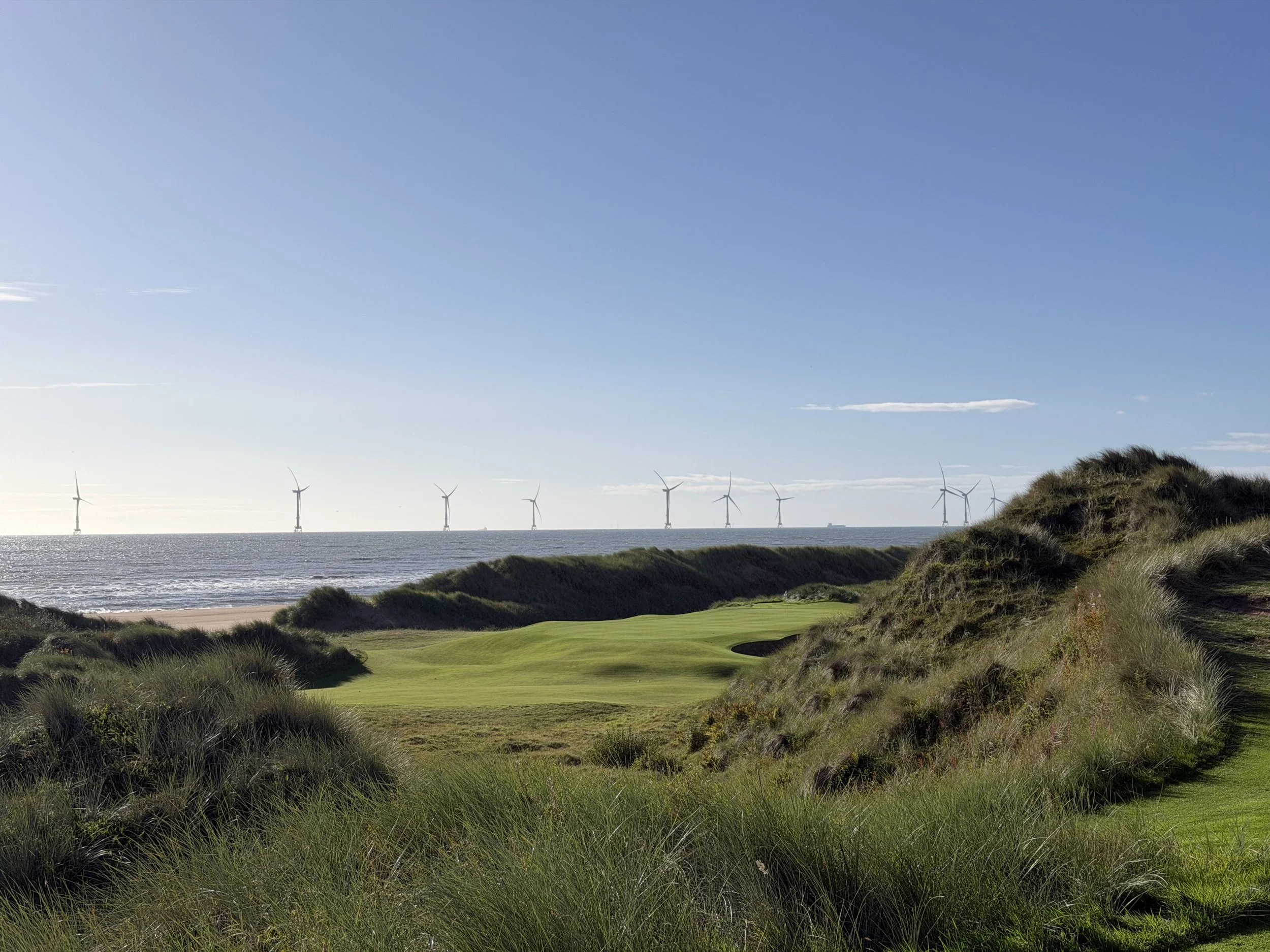
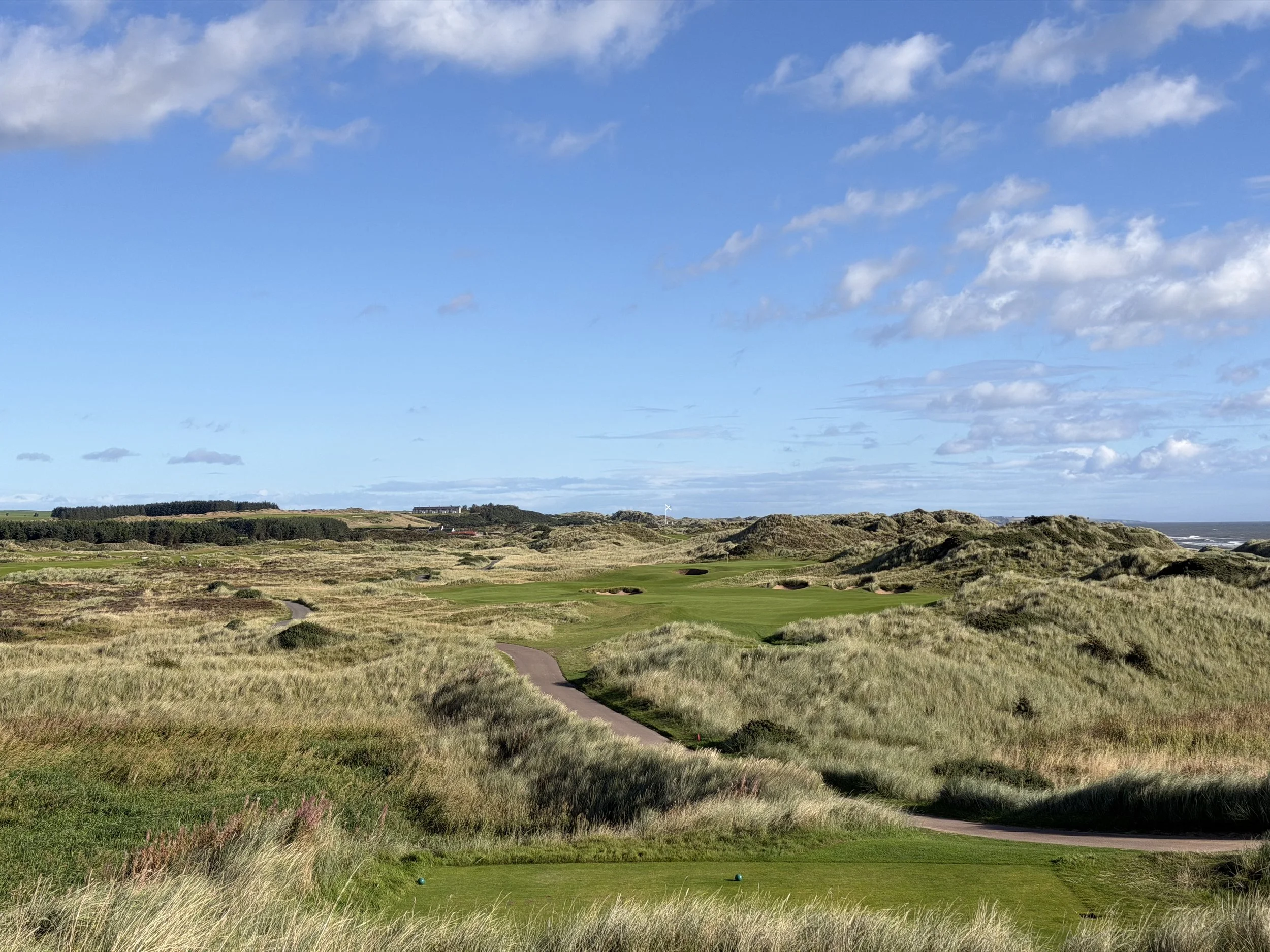
The green complexes were the central problem for me. Undulation can make putting and approach play interesting, but here it often felt exaggerated. Reasonable shots could finish in positions that seemed arbitrarily difficult. The 18th green was the clearest example: its movement was so pronounced that the conclusion felt less like a final examination than a last demonstration of what the design could do.
The 14th had a mound immediately in front of the green that struck me as particularly unnecessary. More broadly, length, complex tee choices, shaped contours and severe greens were layered together. Any one of those tools can create interest. Used simultaneously and repeatedly, they made the course feel over-penal rather than strategically rich.
A very long walk
My watch recorded 8.2 miles. Much of that came from the distances between green and tee complexes rather than from the scorecard alone. This matters for planning. The course requires more time and energy than its yardage suggests, and a walking golfer should arrive prepared for a substantial outing.
A long walk can be a pleasure when the route provides rhythm and discovery. Here the transfers contributed to a sense of scale but weakened continuity. The course felt like a collection of major set pieces separated by travel, rather than a sequence in which one hole naturally handed the golfer to the next.
The better moments
There were compensations. The ninth offered excellent views across the 10th through the 13th, giving a strong impression of the property and its dunes. I also made my only birdie of the day at the steeply uphill seventh, a welcome moment on a course that rarely allowed the scorecard to relax.
Those moments were not enough to change the overall impression. I found the stretch from the 10th through the 15th particularly weak. The holes occupied impressive terrain but did not create the variety, curiosity or pleasure I had hoped to find. Difficulty was abundant; delight was harder to locate.
The problem with the sales pitch
The wider presentation relies heavily on superlatives. That approach may be consistent with the brand, but it raises expectations and invites direct comparison with the great links nearby. Royal Aberdeen and Cruden Bay did not need to tell us how good they were. Their qualities became evident through the ground, the sequence of holes and the way we wanted to play them again.
At the New Course, the claims became part of the disappointment. The estate is impressive, the staff were welcoming and the project is undeniably ambitious. Yet ambition and scale do not by themselves create architectural quality. My experience was of a course trying too hard to be memorable.
Would I return
Not as a priority. I would happily return to the property for the original course, and a combined 36-hole package may make sense for visitors curious to compare the two. But if time were limited, the New Course would sit behind Royal Aberdeen, Cruden Bay and the Trump Old Course on my list.
This is necessarily a personal judgement, and the course may appeal more strongly to golfers who enjoy large-scale, highly shaped modern design. For me, it confused severity with interest too often. The result was the massive disappointment of the trip.
Useful links
• Trump International Scotland Official resort website
• New Course Tour Official hole-by-hole presentation
• Book a Tee Time Current booking options
• Caddie Services Caddie and practice information
• The Greatest 36 The resort’s two-course proposition
Series note
This is the fifth course portrait in the Aberdeen Golf Odyssey series for A Golfer’s Blog. It records a personal and deliberately candid response to the New Course; the separate Old Course article provides the contrasting experience later in the week.