Fairies, Fairways and the Road to Pitlochry via Killin Golf
September 2026
There are faster ways to get from Gullane to Pitlochry, but I doubt there are many better ones.
We left Gullane and headed west to meet Cameron, Spencer and Rory at Doune Castle — a suitably dramatic place for the beginning of our little Highland adventure.
Doune is a remarkable survivor. The great medieval stronghold was built in the late 14th century for Robert Stewart, Duke of Albany, who for a time was effectively Scotland's ruler. More recently, of course, it has acquired a second life on screen. It was used extensively in Monty Python and the Holy Grail, became Castle Leoch in Outlander, and even appeared as Winterfell in the original Game of Thrones pilot.
But none of that was quite as important to the boys as the Doune Castle fairies.
When their Mom and her sister visited Doune as children, the fairies had an uncanny habit of leaving Smarties for them. All these years later, the fairies apparently remembered. Cameron, Spencer and Rory explored the castle and, sure enough, discovered that sweets had once again mysteriously appeared.
Some Scottish traditions are too important to be allowed to die.
Into the Highlands
From Doune we headed north-west, through Thornhill past the wonderful Lion and Unicorn Hotel, Callander, reviving memories of High School, and on into increasingly spectacular country towards Lochearnhead and Killin.
It is one of those wonderful Scottish drives where the landscape changes almost imperceptibly. The gentler country around Stirling gradually gives way to lochs, mountains and glens, until suddenly you feel that you really are in the Highlands.
And then, naturally, I spotted a golf course.
Killin Golf Club wasn't actually on the itinerary. But it looked far too interesting to drive past, so we pulled in, wandered around and took some photographs.
It turned out to have a rather wonderful history.
Golf at Killin goes back at least to 1902, when newspapers recorded the opening of a nine-hole course at Finlarig Farm, only a few minutes' walk from the village. Contemporary reports praised its tough turf, fine playing surface and particularly good greens. The course was promoted partly to encourage tourism to the village — an early example of golf being used as an engine of the Highland visitor economy.
The club's history then becomes slightly complicated. A club was formally constituted in 1913 with 34 founder members, and a substantially improved course opened in June 1914. John Duncan, the professional at Stirling, had advised on the layout, and despite subsequent modifications the club says today's course remains essentially based upon that early design.
The timing was unfortunate. The First World War began only weeks after the new course opened, members left for military service and eventually the course became impossible to maintain. Yet the club survived, the course was restored after the war, and a new clubhouse opened in 1922. Much later, in 1997, the club bought another 48 acres of neighbouring land with the possibility of one day expanding beyond nine holes.
What I particularly liked was its lack of pretension. This isn't grand championship golf. It is a small Highland golf course occupying an extraordinary piece of Scotland.
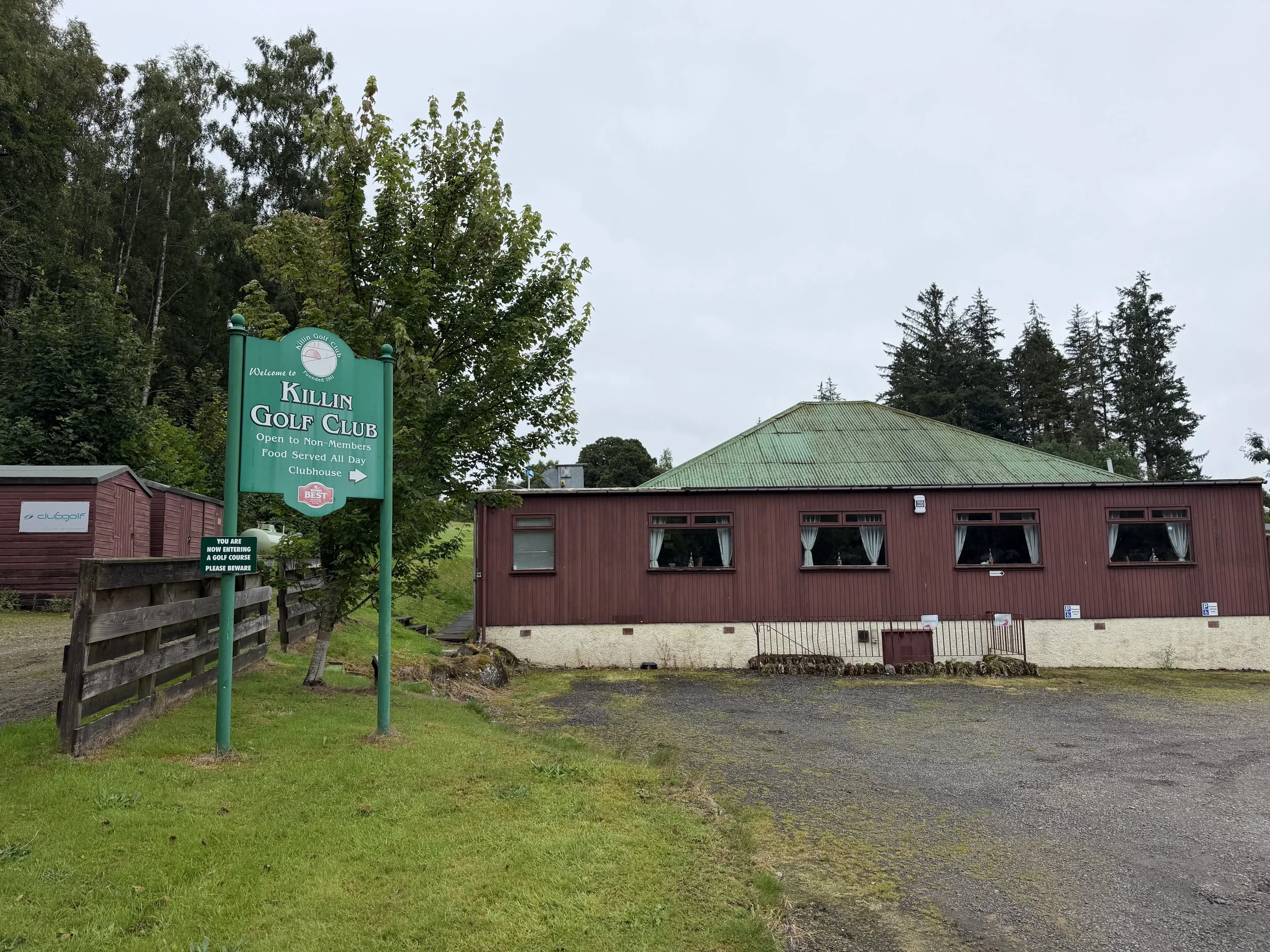
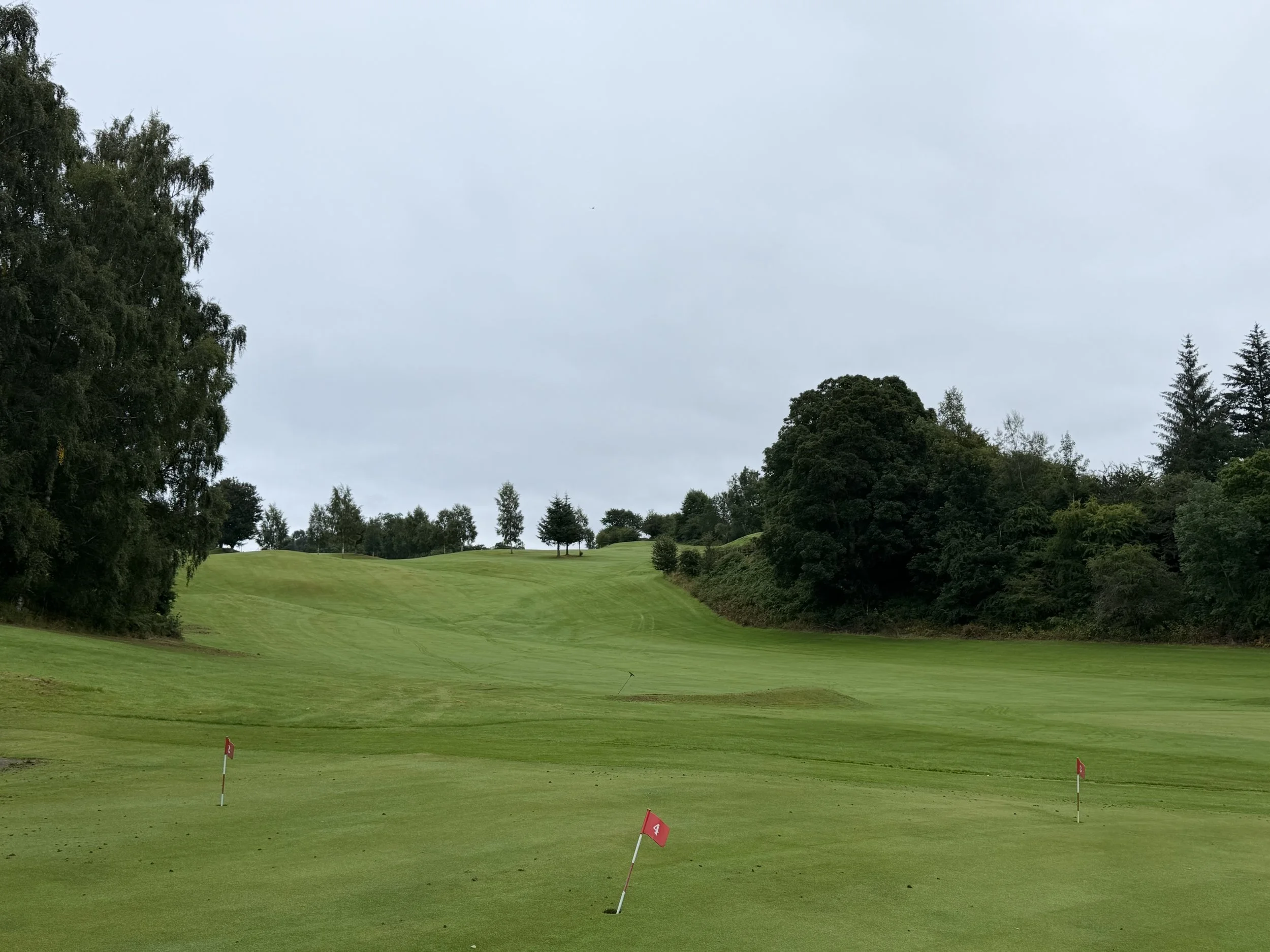
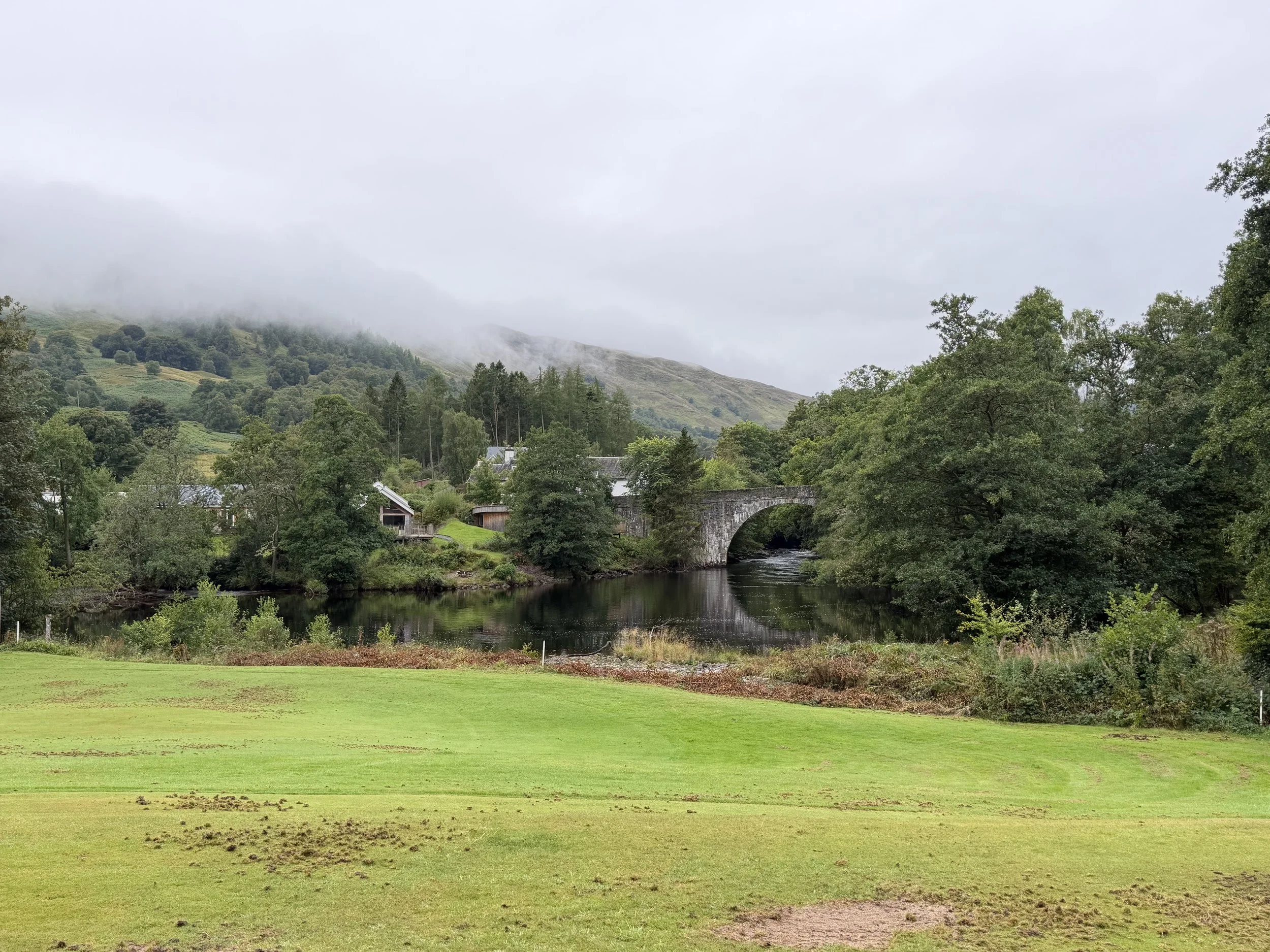
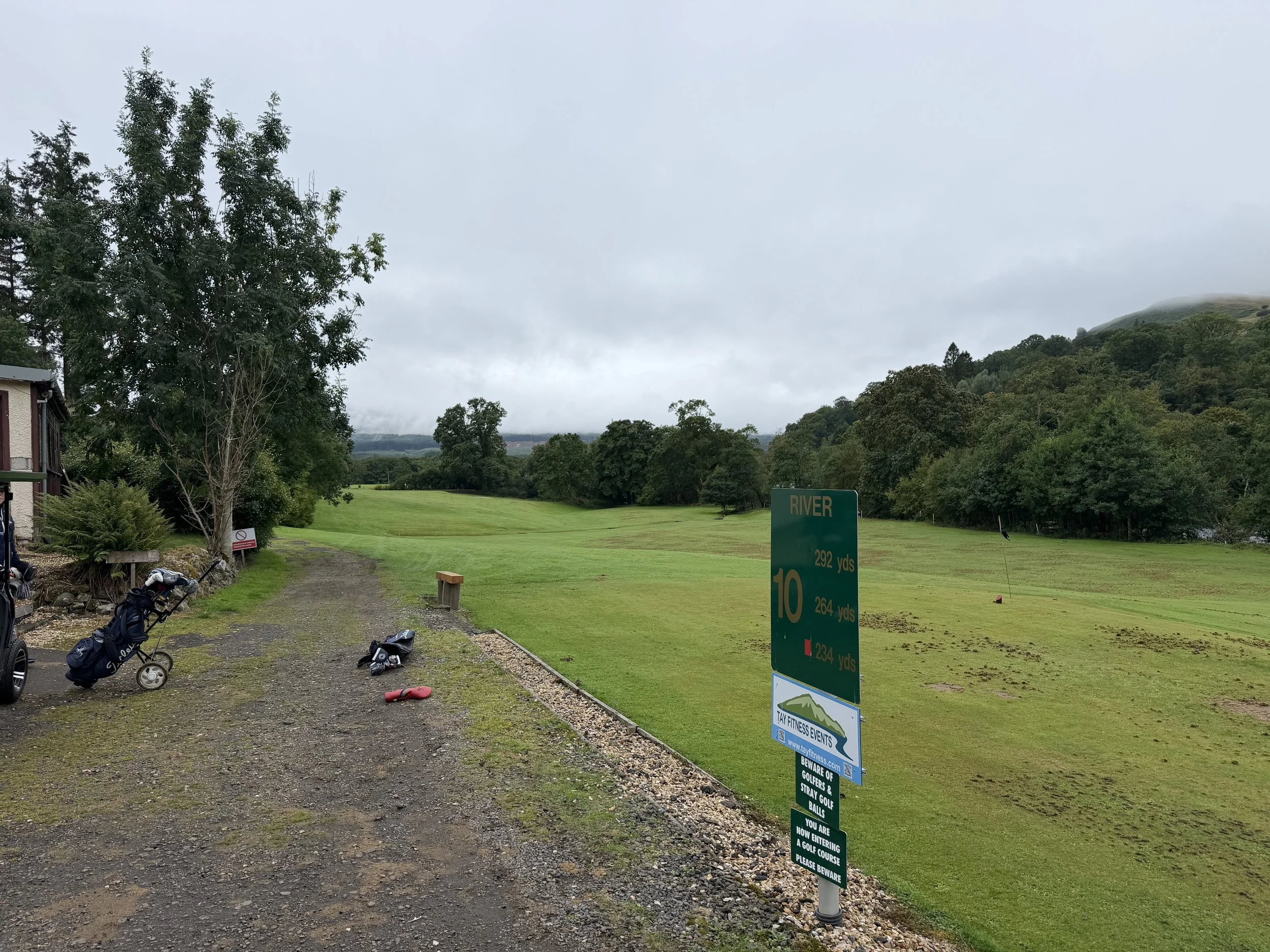
And it immediately went onto my list of courses I would like to come back and play.
Loch Tay and Aberfeldy
From Killin we continued east along Loch Tay.
This may have been the most beautiful part of the entire journey — water on one side, mountains rising around us and the road following the contours of the loch.
Then through Aberfeldy, another place full of family associations, before the final run into Pitlochry.
It was a magnificent drive.
Uncle Teeth
Pitlochry brought another family reunion.
We met Uncle Keith — known inevitably to the boys as "Uncle Teeth" — and Auntie Susan.
And rather than embarking upon an elaborate programme of Highland sightseeing, we did something much better. We played soccer next door. Three boys, assorted adults, a football and plenty of space turned out to be all the entertainment required.
Then the following day it was down towards the River Tummel and Pitlochry Dam Visitor Centre. The dam is an impressive piece of post-war Scottish engineering, but for the boys the attraction was simpler: lots to look at, water rushing through the landscape and another place to explore.
From there we crossed towards Pitlochry Festival Theatre for coffee — one of those wonderfully civilised Scottish combinations where theatre, gardens, river and café all seem to belong together.
And finally, inevitably, we returned to golf. This time everyone could play. The Pitlochry Putting Green has a proper 18-hole putting course, and it proved the perfect final event. Cameron and Spencer could compete, Rory could join in, and Papa could presumably convince himself that decades of golfing experience ought to provide some sort of competitive advantage.
Whether it did is probably best left out of the historical record.
Looking back, we had begun beside the great links of East Lothian, found sweets left by fairies in a medieval castle, retraced something their Mom had done as a little girl, driven into the Highlands, discovered a wonderful little golf course almost by accident, travelled beside Loch Tay and through Aberfeldy, reunited the boys with Uncle Teeth and Auntie Susan, played soccer, visited a dam, had coffee at the theatre and finished with 18 holes of putting.
There were three generations involved, which made it particularly special.
Perhaps that was the best part of it. The boys won't remember every mountain we passed or every detail of the places we visited. But hopefully they'll remember the fairies at Doune, soccer with Uncle Teeth, putting in Pitlochry and travelling through Scotland together.
And I will certainly remember Killin Golf Club and its on my to play list.