Perhaps it is the density of world class golf packed into such a modest geography, or perhaps it is the simple fact that almost every road seems eventually to find the sea, the wind, and a stretch of rumpled linksland that make Fife so special.
This time the journey was to Leven Links and Lundin Links, in the company of Steve and Will, together with Alister, member at Lundin Links.
Steve, Will and I drove early morning, (bit too early as it turned out) leaving behind the familiar sweep of East Lothian linksland. It is one of the more enjoyable golfing drives in Scotland, particularly once the road approaches the striking structure of the “new” Forth Bridge. Even though the new bridge is a striking design and engineering feat, the scale of the old Bridge and the Railways Bridge with their Victorian engineering still arrests attention.
Once over the bridge, the landscape changes subtly. Fife feels quieter, softer perhaps, with small farming villages, rolling countryside and intermittent views eastward toward the North Sea. Approaching the East Neuk, the villages become increasingly picturesque. Further round the poiint, places such as Elie, Anstruther and Pittenweem remain among the most charming coastal communities in Scotland, with fishing harbours, narrow lanes and stone cottages largely untouched by modern excess; second home escapes for professionals from Edinburgh, Glasgow and Aberdeen perhaps, but few examples of modern architectural statements to contrast with the historic feel to these places.
Close to the golf courses sits the lovely seaside village of Lower Largo, famous as the birthplace of Alexander Selkirk, whose adventures inspired Robinson Crusoe. Along this coastline there are small harbours, walking paths and expansive sea views stretching across the Forth toward East Lothian. On a clear evening, it is easy to understand why generations have chosen to remain here. Leven is known for its long sandy beach and promenade, its industrial heritage, and as a traditional Fife coastal holiday town. The River Leven reaches the Firth of Forth there, and historically the town was associated with coal mining, linen/textiles and manufacturing.
Leven and Lundin both occupy important ground in the history of Scottish golf, yet neither tends to dominate modern golf-travel itineraries in the way that St Andrews, Kingsbarns or Carnoustie do. This is of course true of so many great courses in Scotland. Visitors naturally want to play the marquee names and as a result miss out on part of the truly Scottish golf experience.
Lundin Links is a really good golf course, and when we played it was in excellent condition. We played with local member Alister R, a terrific guy with a really good golf game. The club is very friendly, has a nice Proshop and lounge with typical club food and great bar staff. The opening stretch of four holes which run alongside the Firth is among the more memorable starts in Scottish golf, particularly challenging if the wind is coming from the West, which fortunately enough for us, it was not. In fact we were very lucky with a gorgeous calm and sunny day.
Lundin’s origins date formally to 1868, although golf had been played over the linksland before then. Like many Scottish clubs, its evolution reflects the overlapping influence of several important architectural minds. Old Tom Morris advised on early development work, while later modifications involved both James Braid and Harry Colt. Locals tell you the first 9 are Old Tom’s, while the back 9 are James Braid designed.
Lundin has long occupied an important role within the Open Championship ecosystem. It has regularly served as a Final Open Qualifying venue and has hosted numerous prestigious amateur and professional events over the years. Brad Faxon is an honorary Member.
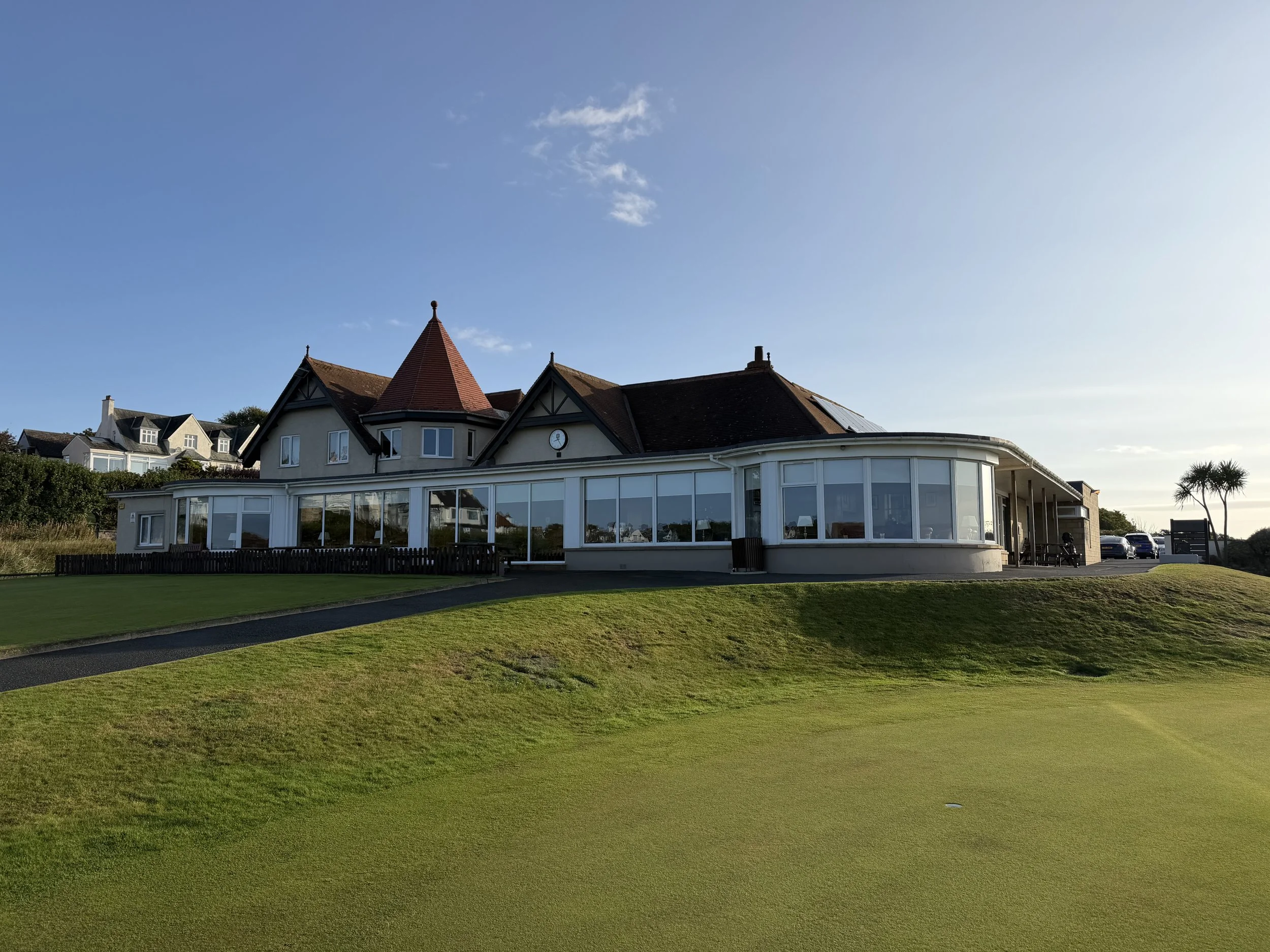
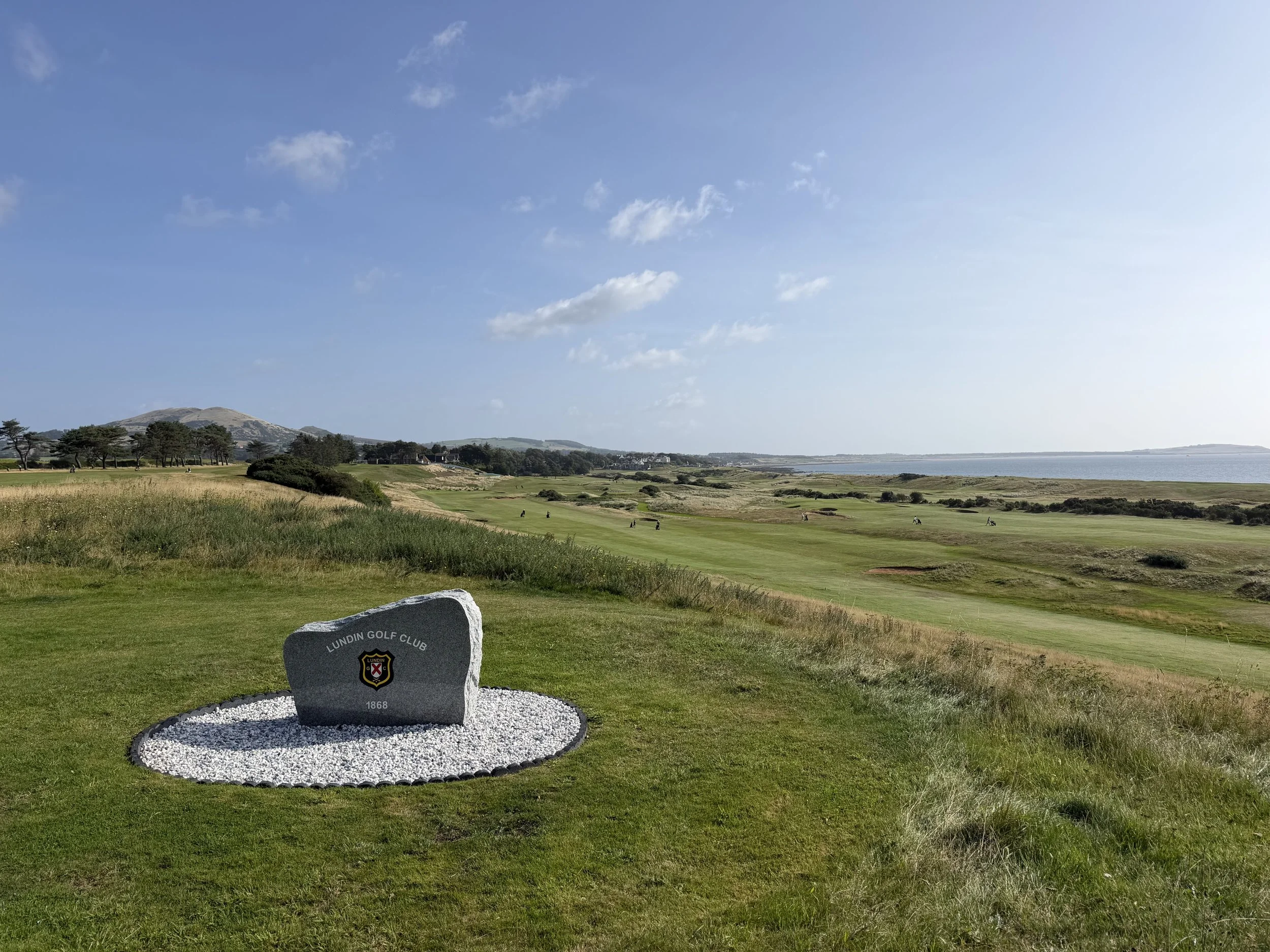
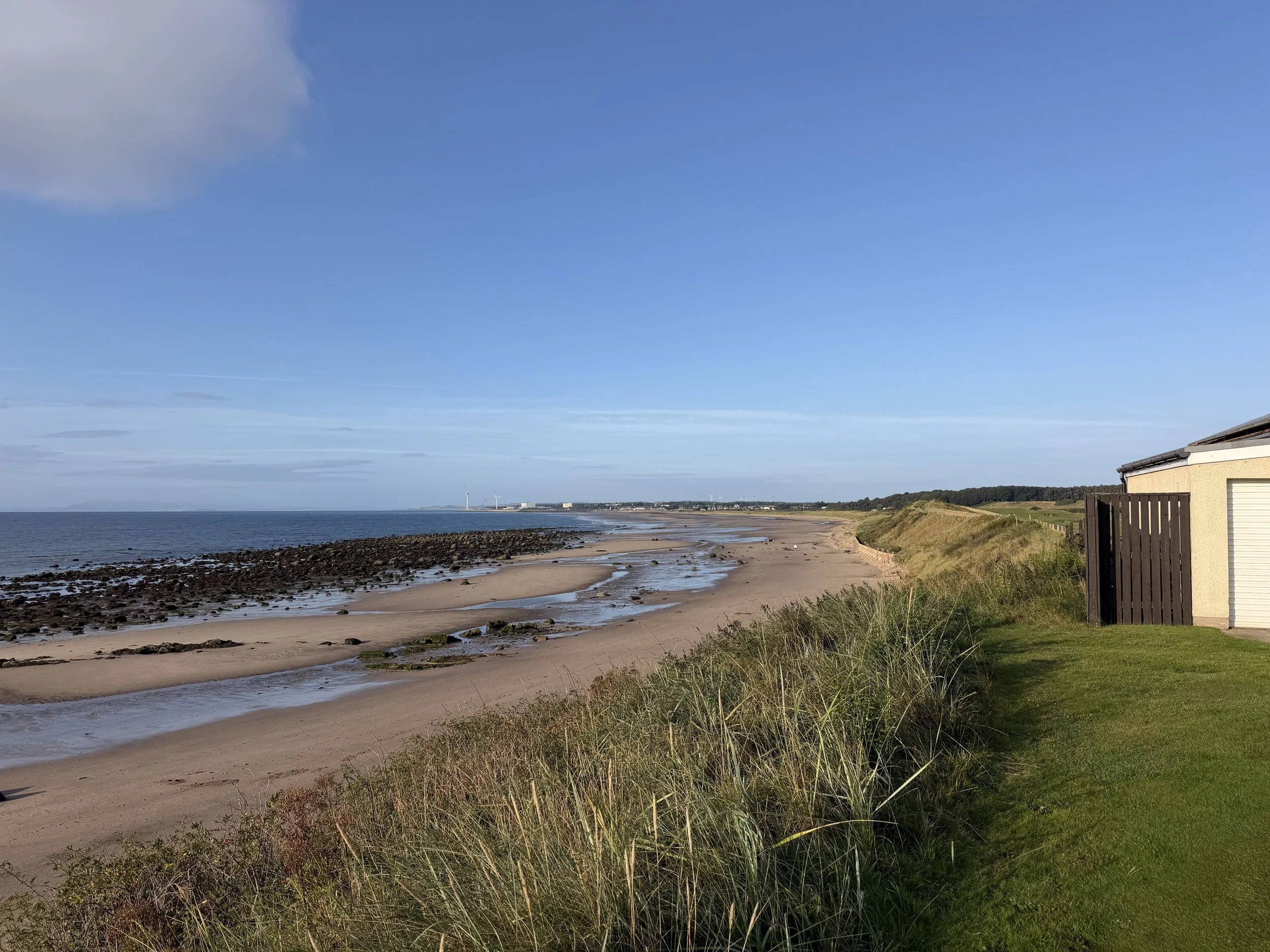
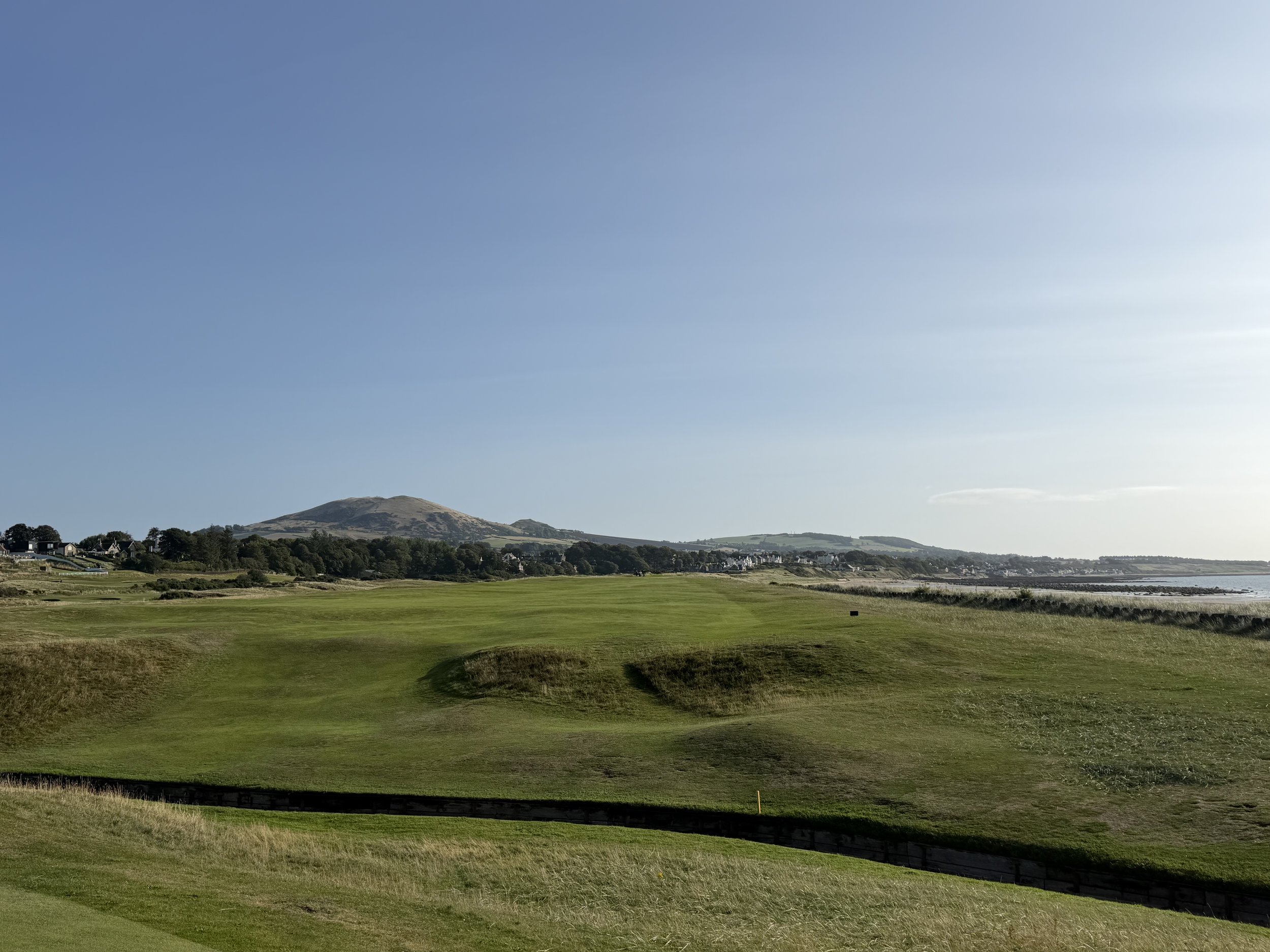
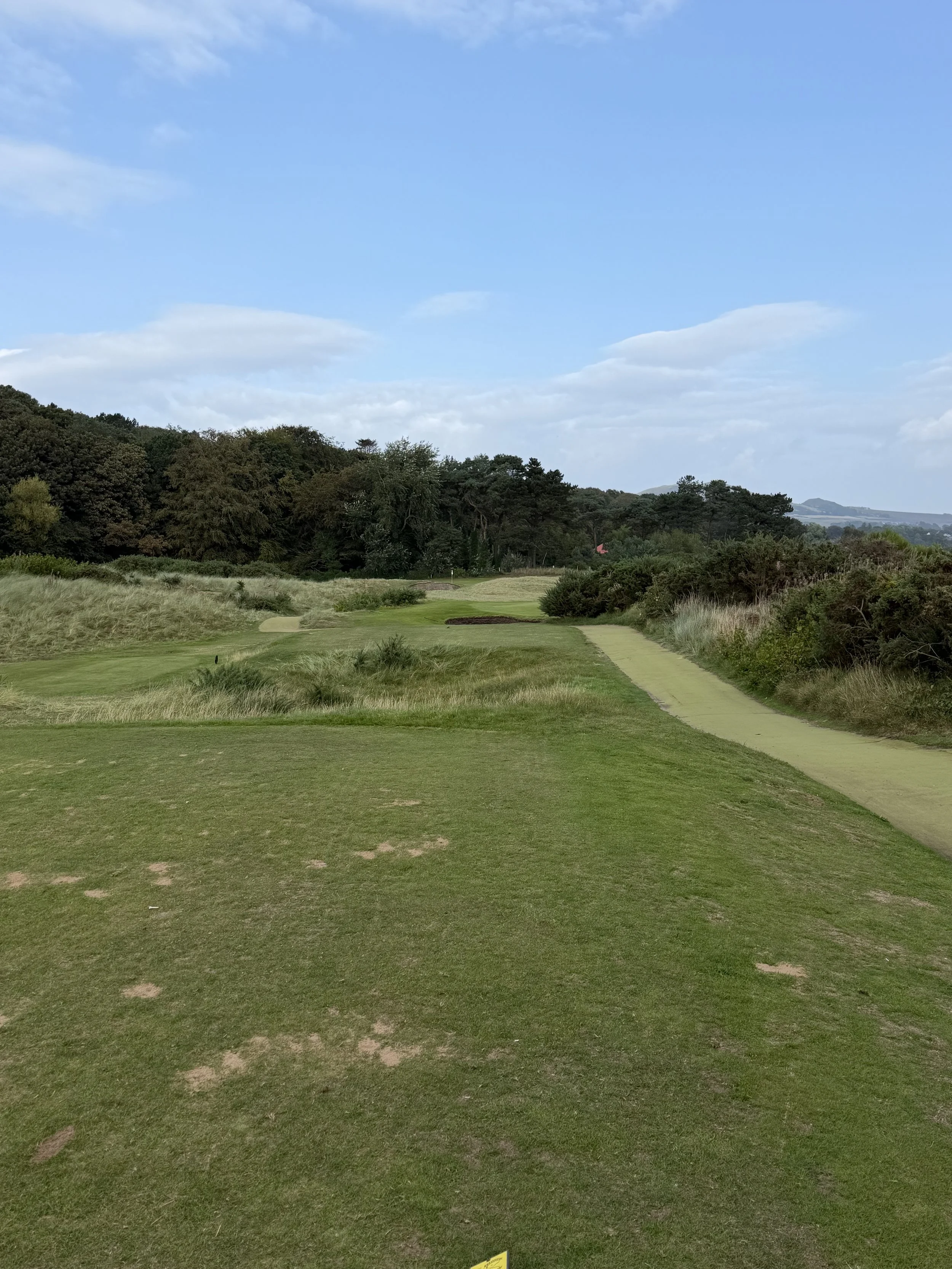
I thought the course layout was really good. As is typical with links golf, you have to work out tee shot placement well, then be very careful on approaches as it is easy to go long or end up in the many traps around this course. I thought the opening hole playing from an elevated tee next to the proshop into a valley and then back p to the green was a really good starting hole. Some of the holes were very tight and the greens were in excellent condition. Views from holes 12 and 13 are magnificent. We played Yellow tees which at around 6100 yards which is not long, but long enough for me for a really enjoyable round.
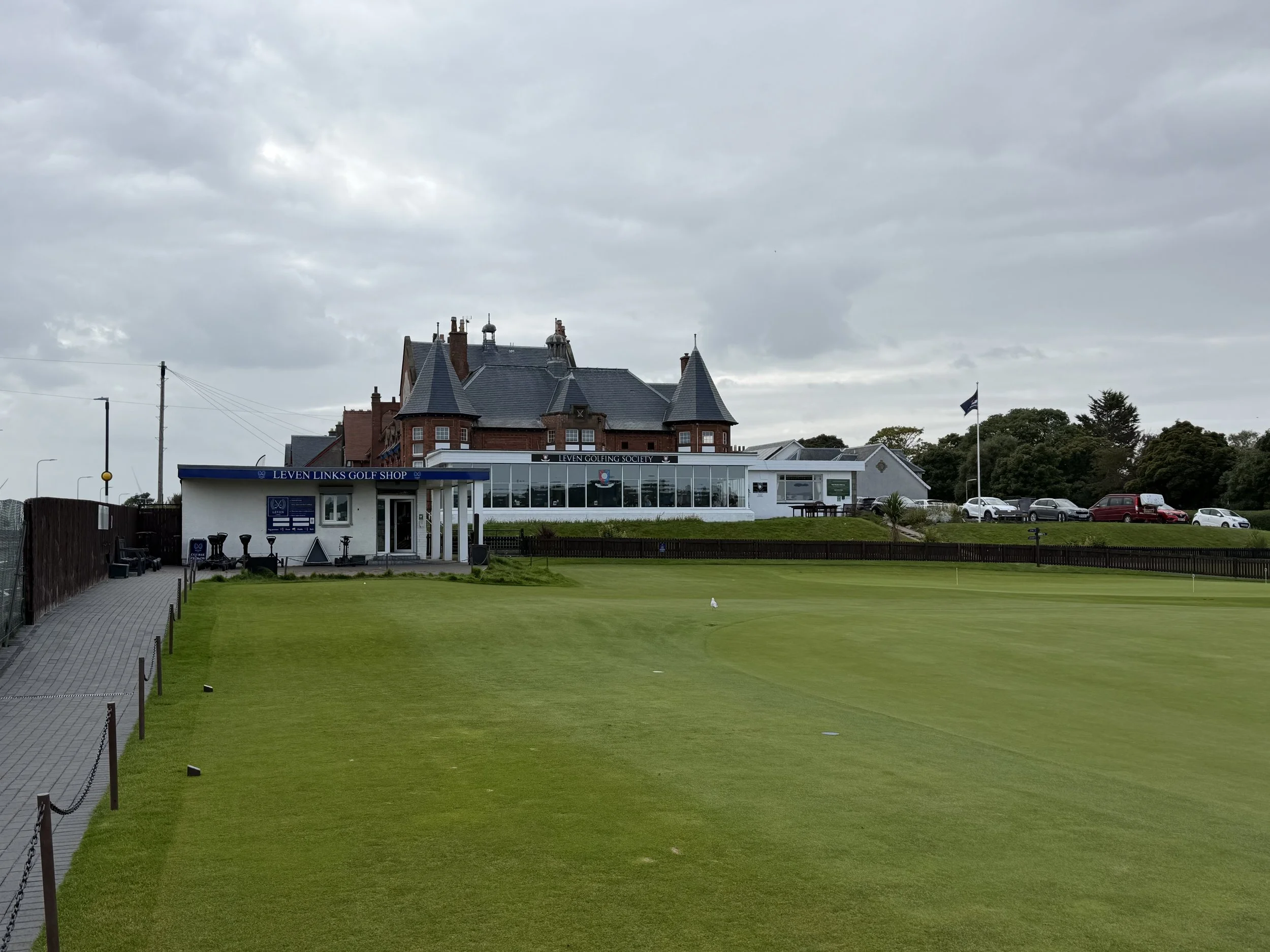
Our afternoon round was at Leven, a roughly 10 minutes drive from Lundin Links.
Leven is one of the oldest golfing sites in Scotland, with golf recorded there as early as the 1820s. There is a wall at 4 green on the Links that divides the two courses, but there are many other differences, with Leven not in as good condition, plus a layout that results in multiple cries of “fore”. Leven could be a great links course with some investment, and perhaps some rethinking about the layout, but its a fun course and the people at the Club are again very friendly and helpful.